

Aspire guide
Race Day Nutrition
Race Day Nutrition manual
Managing Pre-Race Nerves & Appetite
Strategies for eating when race-day anxiety suppresses appetite.
Why this matters
Strategies for eating when race-day anxiety suppresses appetite.
Read time
4 min
Audience
Athlete + Coach
Use it for
Race Day Nutrition
Start here
Race nerves change the format of fueling, not the need for it.
Coach prompt
Make each anxious athlete write down a full, half, and liquid breakfast option before championship season.
Quick reference
Topic snapshot
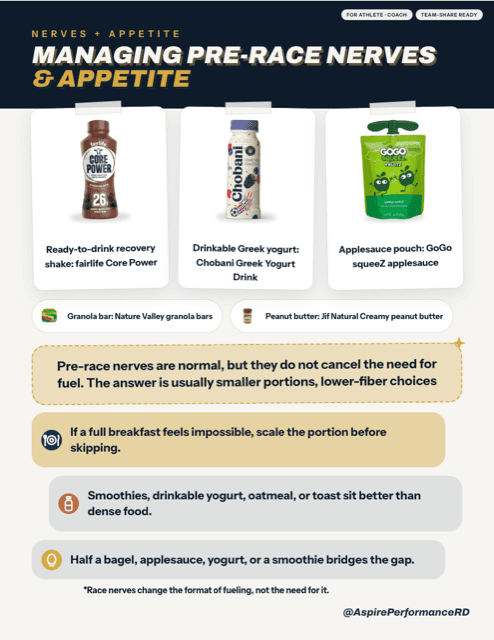
The printed sheet
Read time
4 min
Audience
Athlete + Coach
Best next move
Use it this week
Make each anxious athlete write down a full, half, and liquid breakfast option before championship season.
Quick reference map
Use the topic like a clear checklist
In the library
Format
Read the topic here, then download the PDF only when you need an offline copy.
Best use
Open the sections you need, then share the same topic link with coaches, parents, or athletes.
Recognizable options
What this can look like at the store
These are familiar examples, not a required shopping list. Use the food category to find an option that fits your athlete, budget, and allergy needs.
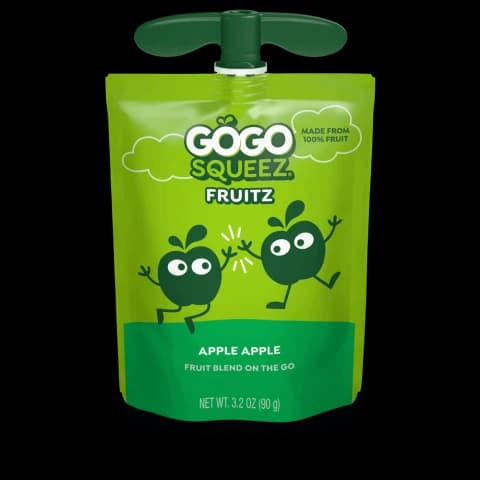
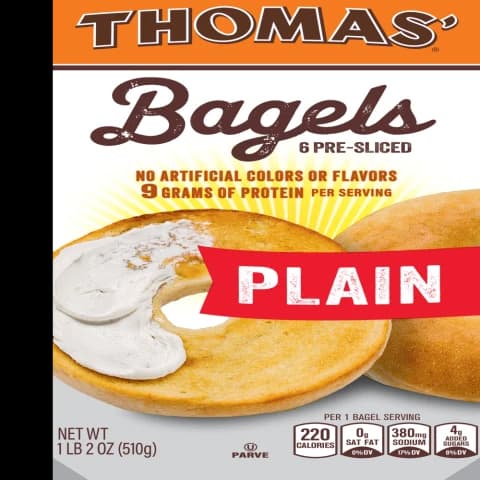
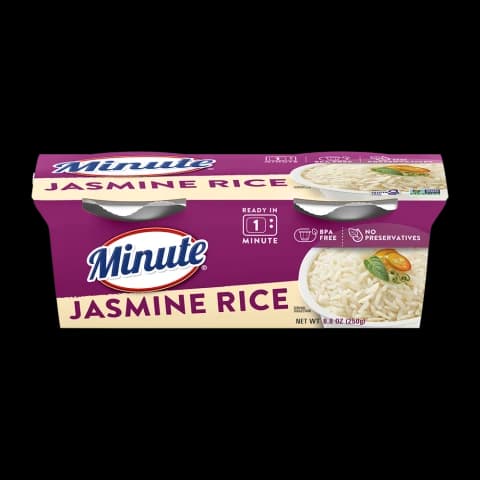
Brands are shown only as concrete examples, not endorsements. Ingredients, labels, and availability can change; check the current package for allergens and fit. Image sources and rights notice.
Quick start
Start here
Strategies for eating when race-day anxiety suppresses appetite.

Baseline rule
Some fuel is always better than none
- If a full breakfast feels impossible, scale the portion before skipping.
- Half a bagel, applesauce, yogurt, or a smoothie bridges the gap.
Food format
Go softer and lower fiber when the stomach feels tight
- Smoothies, drinkable yogurt, oatmeal, or toast sit better than dense food.
- Keep fat, grease, and raw fiber low.
Backup plan
Build a tiered breakfast before race season
- Have a full option, a half option, and a liquid option already tested.
- Write those options down so race morning decisions are automatic.
Context
Overview
TL;DR
- A nervous stomach is common; it is not a character flaw.
- Use familiar foods, a flexible portion, and the time of morning when appetite is most workable.
- A smaller or drinkable option can help when a full meal feels difficult.
- Persistent vomiting, food avoidance, or severe anxiety deserves family and professional support.

Coach line
TL;DR
Nerves can change the stomach
Competition stress can reduce appetite, increase nausea, and make a familiar meal feel different. That does not mean digestion has “shut down,” and it does not mean every athlete should force the same breakfast.
The goal is to keep the morning calm enough that useful food remains possible.

Unlock the rest of the manual
Full access opens every section and the ebook PDF.
Evidence
References
The sources behind this topic. Where a citation carries a link, it opens the record so you can check the original.
- 1.Thomas DT, Erdman KA, Burke LM. Nutrition and Athletic Performance. Med Sci Sports Exerc. 2016;48(3):543-568.PubMed 26891166
- 2.Desbrow B. Youth Athlete Development and Nutrition. Sports Med. 2021;51(Suppl 1):3-12.
What to do next
Use it this week
Make each anxious athlete write down a full, half, and liquid breakfast option before championship season.
Related tool
Race morning fuel
Turn familiar choices into a race-morning checklist.
Open race morning fuelSource topics
nerves • anxiety • appetite • stress • race day