
Aspire guide
Injury Recovery
Injury Recovery manual
Build Strong Bones During the Teen Years
A practical bone-health guide for adolescent runners: support food access and recovery, recognize a possible bone concern, and route assessment and return decisions to qualified care.
Why this matters
Adolescence is an important period for building bone.
Read time
5 min
Audience
Athlete + Coach + Parent
Use it for
Injury Recovery
Start here
Bone protection is enough food now, and a fast handoff the first time a bone complains.
Coach prompt
[ ] School-day meals and practice snacks are realistically accessible.
Quick reference
Topic snapshot
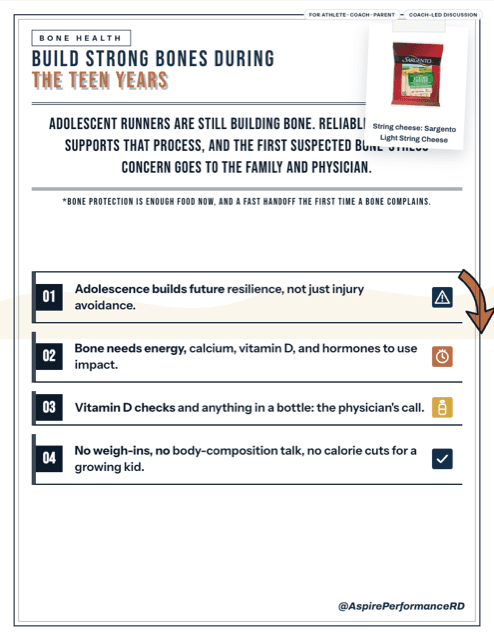
The printed sheet
Read time
5 min
Audience
Athlete + Coach + Parent
Best next move
Use it this week
[ ] School-day meals and practice snacks are realistically accessible.
Quick reference map
Use the topic like a clear checklist
In the library
Format
Read the topic here, then download the PDF only when you need an offline copy.
Best use
Open the sections you need, then share the same topic link with coaches, parents, or athletes.
Recognizable options
What this can look like at the store
These are familiar examples, not a required shopping list. Use the food category to find an option that fits your athlete, budget, and allergy needs.
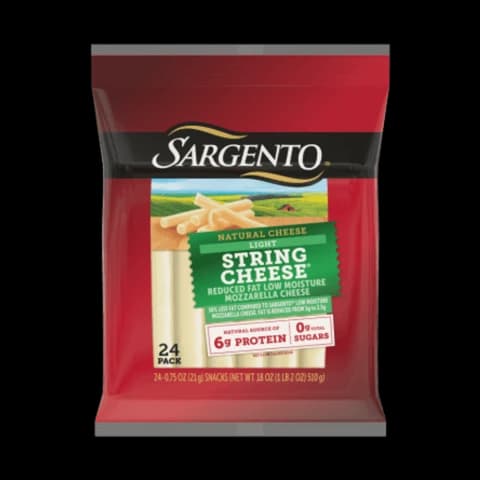
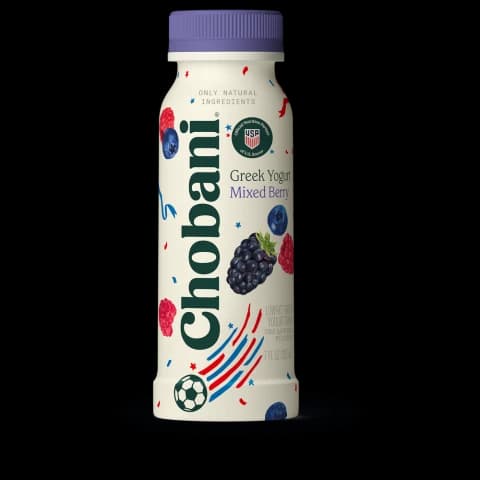
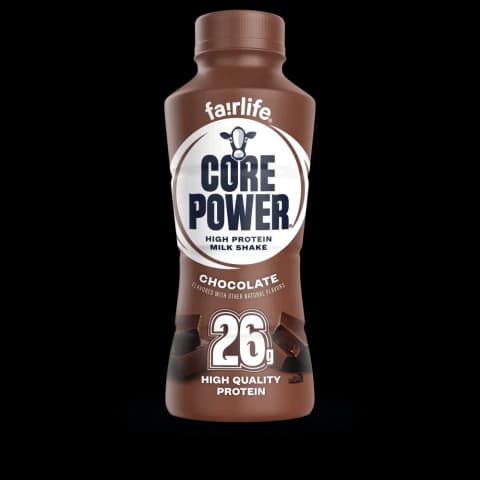
Brands are shown only as concrete examples, not endorsements. Ingredients, labels, and availability can change; check the current package for allergens and fit. Image sources and rights notice.
Quick start
Start here
A practical bone-health guide for adolescent runners: support food access and recovery, recognize a possible bone concern, and route assessment and return…

Peak window
Bone is still being built during the years many runners start training hard
- Adolescence builds future resilience, not just injury avoidance.
- Bone needs energy, calcium, vitamin D, and hormones to use impact.
Fuel first
Reliable food supports bone; the treating team evaluates the cause
- Keep regular meals and snacks available through healing and growth.
- Share food-access, fatigue, pain, and training notes with family.
Daily nutrients
Calcium is a grocery number, and vitamin D is the physician's call
- Ages 9-18 need 1,300 mg per day of calcium from food, most of any age.
- Vitamin D checks and anything in a bottle: the physician's call.
Context
Overview
Adolescence is an important period for building bone. Running can contribute useful mechanical loading, but bone health also depends on enough overall energy, varied food, recovery, health history, and a training plan the athlete can absorb.
No single food or supplement prevents every bone stress injury. Coaches and parents can still do something valuable: make regular food and recovery easier, respond early to focal pain, and keep diagnosis and return decisions with the treating team.

A possible bone concern is a referral, not a team test
Focal pain over a bone, pain that keeps returning with impact, pain during walking or daily activity, night pain, or a history of bone stress injury deserves prompt attention.
When a bone concern is first suspected:
- Stop running, jumping, or other painful impact activity.
- Tell the parent or guardian and athletic trainer or medical lead promptly.
- Arrange evaluation by the athlete's physician or qualified sports-medicine clinician.
- Follow the treating team's activity instructions.
Do not ask the athlete to hop, run through it, or complete a workout to show whether the pain is serious. A coach cannot determine the diagnosis or severity from the sideline, and an early concern should not wait for pain to become disabling.
Unlock the rest of the manual
Full access opens every section and the ebook PDF.
Evidence
References
The sources behind this topic. Where a citation carries a link, it opens the record so you can check the original.
- 1.Weiss Kelly AK, Hecht S; American Academy of Pediatrics Council on Sports Medicine and Fitness. The female athlete triad. Pediatrics. 2016;138(2):e20160922.PubMed 27432847
- 2.Mountjoy M, Ackerman KE, Bailey DM, et al. 2023 International Olympic Committee consensus statement on Relative Energy Deficiency in Sport (REDs). British Journal of Sports Medicine. 2023;57(17):1073-1097.doi:10.1136/bjsports-2023-106994
- 3.National Institutes of Health, Office of Dietary Supplements. Calcium fact sheet for health professionals.NIH ODS
- 4.National Institutes of Health, Office of Dietary Supplements. Vitamin D fact sheet for health professionals.NIH ODS
What to do next
Use it this week
[ ] School-day meals and practice snacks are realistically accessible.
Related tool
Sick-day protocol
Use the reviewed return-or-refer boundaries while following the clinician-led plan.
Open sick-day protocolSource topics
adolescent runner bone health • youth runner stress fracture • bone stress injury referral • calcium foods teen athlete • vitamin D athlete care • runner food access