

Aspire guide
Injury Recovery
Injury Recovery manual
Low Energy Availability Can Affect Every Runner
An all-runner guide to noticing clusters of underfueling concerns, improving access and team culture, and routing diagnosis and treatment to qualified care.
Why this matters
Relative Energy Deficiency in Sport, or RED-S, describes health and performance effects that can occur when an athlete does not have enough available energy to support training, daily life, growth,…
Read time
6 min
Audience
Coach + Parent + Athlete
Use it for
Injury Recovery
Start here
Low energy availability can affect distance runners, sprinters, jumpers, throwers, and athletes of every sex; coaches observe, document, communicate, refer, and support…
Coach prompt
What observable cluster requires a private family and medical handoff now?
Quick reference
Topic snapshot
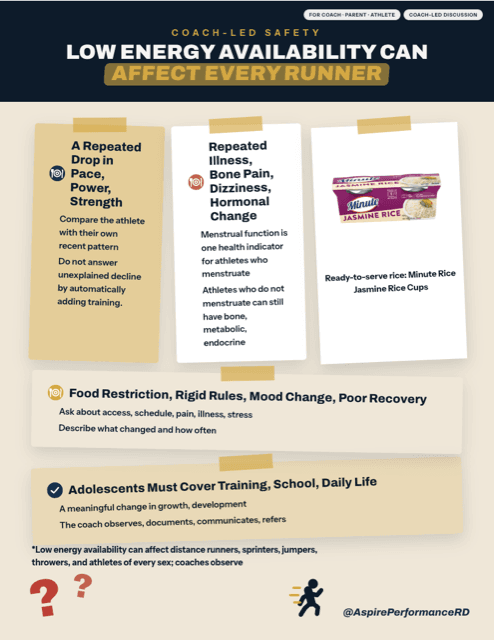
The printed sheet
Read time
6 min
Audience
Coach + Parent + Athlete
Best next move
Use it this week
What observable cluster requires a private family and medical handoff now?
Quick reference map
Use the topic like a clear checklist
In the library
Format
Read the topic here, then download the PDF only when you need an offline copy.
Best use
Open the sections you need, then share the same topic link with coaches, parents, or athletes.
Recognizable options
What this can look like at the store
These are familiar examples, not a required shopping list. Use the food category to find an option that fits your athlete, budget, and allergy needs.
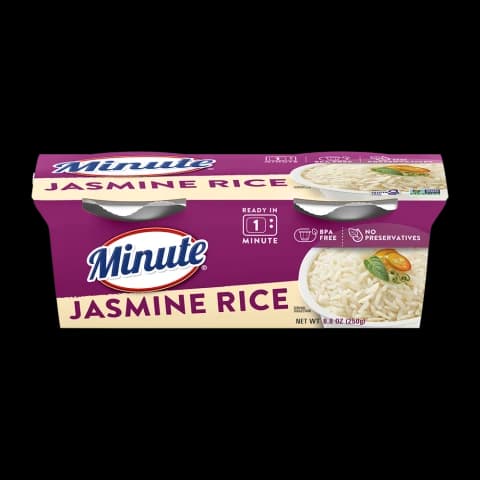
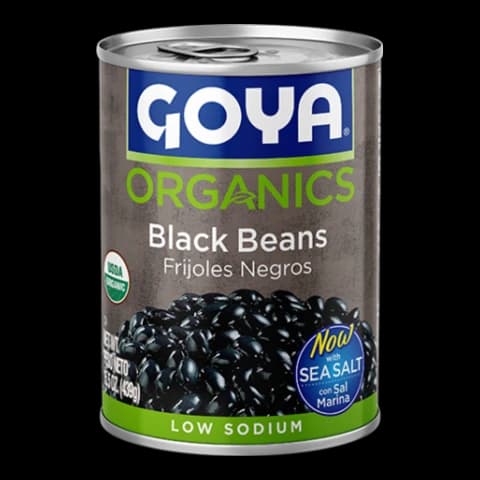
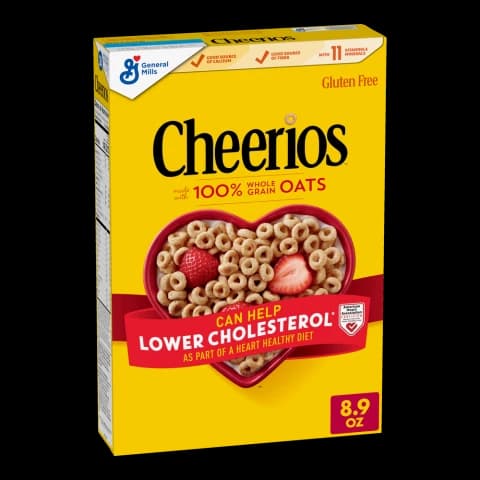
Brands are shown only as concrete examples, not endorsements. Ingredients, labels, and availability can change; check the current package for allergens and fit. Image sources and rights notice.
Quick start
Start here
An all-runner guide to noticing clusters of underfueling concerns, improving access and team culture, and routing diagnosis and treatment to qualified care.

Performance
A repeated drop in pace, power, strength, or training tolerance can be part of the…
- Compare the athlete with their own recent pattern, not a teammate or body type.
- Do not answer unexplained decline by automatically adding training.
Health
Repeated illness, bone pain, dizziness, hormonal change, or other health concerns belong…
- Menstrual function is one health indicator for athletes who menstruate, not the organizing definition.
- Athletes who do not menstruate can still have bone, metabolic, endocrine, immune, and reproductive effects.
Behavior + recovery
Food restriction, rigid rules, mood change, poor recovery, and repeat soreness matter…
- Ask about access, schedule, pain, illness, stress, and barriers without interrogating intake.
- Describe what changed and how often; do not score or diagnose from the handout.
Context
Overview
Relative Energy Deficiency in Sport, or RED-S, describes health and performance effects that can occur when an athlete does not have enough available energy to support training, daily life, growth, and body function.
It can affect athletes of any gender and in any event group. It is not something a coach confirms from appearance, one conversation, or one sign. The useful coaching job is to notice a pattern, make the first conversation supportive and private, involve the family, and connect the athlete with qualified medical and nutrition care.
What it can look like across runners
The action is the same: describe the observable cluster, improve access, involve the parent or guardian privately, and let a physician-led care team assess the cause. Do not use this handout as a team self-diagnosis checklist.
recurring injury or illness, fatigue, declining training tolerance, mood or concentration changes, expanding food rules, or poor recovery
a change from the athlete’s usual cycle pattern may be one signal, but it is not the definition and does not belong in a public team discussion
low energy availability may coexist with impaired bone health and reproductive-hormone changes; appearance and race performance cannot rule it in or out
Unlock the rest of the manual
Full access opens every section and the ebook PDF.
Evidence
References
The sources behind this topic. Where a citation carries a link, it opens the record so you can check the original.
- 1.Mountjoy M, Ackerman KE, Bailey DM, et al. 2023 International Olympic Committee consensus statement on Relative Energy Deficiency in Sport (REDs). British Journal of Sports Medicine. 2023;57(17):1073-1097.doi:10.1136/bjsports-2023-106994
- 2.Tenforde AS, Barrack MT, Nattiv A, Fredericson M. Parallels with the Female Athlete Triad in Male Athletes. Sports Medicine. 2016;46(2):171-182.PubMed 26497148
- 3.Weiss Kelly AK, Hecht S; American Academy of Pediatrics Council on Sports Medicine and Fitness. The female athlete triad. Pediatrics. 2016;138(2):e20160922.PubMed 27432847
- 4.Thomas DT, Erdman KA, Burke LM. Position of the Academy of Nutrition and Dietetics, Dietitians of Canada, and the American College of Sports Medicine: nutrition and athletic performance. Journal of the Academy of Nutrition and Dietetics. 2016;116(3):501-528.PubMed 26920240
What to do next
Use it this week
What observable cluster requires a private family and medical handoff now?
Related tool
Red flags and referral guide
Sort a repeated pattern from one bad week, then take the questions it prints to a parent or guardian, a physician, and a sports dietitian.
Open the referral guideSource topics
RED-S athlete support • relative energy deficiency in sport • low energy availability runner • coach referral RED-S • parent athlete fueling support • recurrent bone injury runner